
AlphaFold predicted structure
SQSTM1 · Q13501
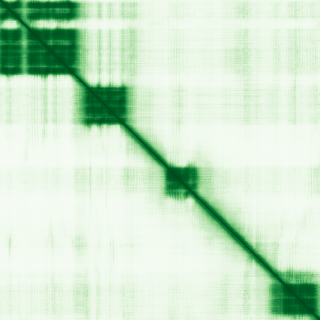
Mean pLDDT
67.3/ 100
Low
440 residues
Confidence breakdown
- Very high(≥ 90)31%
- Confident(70–90)19%
- Low(50–70)14%
- Very low(< 50)36%
Open interactive 3D viewer
AlphaFold (Jumper et al., 2021) · CC BY 4.0
sequestosome 1
Annotations refreshed 2 months ago.
Diagnostic Grade (Green)
Adult onset neurodegenerative disorder
MONOALLELIC, autosomal or pseudoautosomal, NOT imprintedAtaxia and cerebellar anomalies - narrow panel
BIALLELIC, autosomal or pseudoautosomalChildhood onset dystonia, chorea or related movement disorder
BIALLELIC, autosomal or pseudoautosomalDistal myopathies
MONOALLELIC, autosomal or pseudoautosomal, NOT imprintedHereditary ataxia with onset in adulthood
BIALLELIC, autosomal or pseudoautosomalSarcoma cancer susceptibility
MONOALLELIC, autosomal or pseudoautosomal, imprinted status unknownSarcoma susceptibility
MONOALLELIC, autosomal or pseudoautosomal, imprinted status unknownChildhood solid tumours cancer susceptibility
MONOALLELIC, autosomal or pseudoautosomal, imprinted status unknown+2 more panels — install the extension to see the full list inline on any page.
amyotrophic lateral sclerosis
behavioral variant of frontotemporal dementia
frontotemporal dementia with motor neuron disease
bone Paget disease
neurodegeneration with ataxia, dystonia, and gaze palsy, childhood-onset
Distal myopathy, Nonaka type
frontotemporal dementia and/or amyotrophic lateral sclerosis 1
osteosarcoma
cancer
neurodegenerative disease
Score is the Open Targets composite evidence score (0-1). Higher = stronger gene-disease association.
Sequestosome-1
Molecular adapter required for selective macroautophagy (aggrephagy) by acting as a bridge between polyubiquitinated proteins and autophagosomes (PubMed:15340068, PubMed:15953362, PubMed:16286508, PubMed:17580304, PubMed:20168092, PubMed:22017874, PubMed:22622177, PubMed:24128730, PubMed:28404643, PubMed:29343546, PubMed:29507397, PubMed:31857589, PubMed:33509017, PubMed:34471133, PubMed:34893540, PubMed:35831301, PubMed:37306101, PubMed:37802024, PubMed:40542578). Promotes the recruitment of ubiquitinated cargo proteins to autophagosomes via multiple domains that bridge proteins and organelles in different steps (PubMed:16286508, PubMed:20168092, PubMed:22622177, PubMed:24128730, PubMed:28404643, PubMed:29343546, PubMed:29507397, PubMed:34893540, PubMed:37802024). SQSTM1 first mediates the assembly and removal of ubiquitinated proteins by undergoing liquid-liquid phase separation upon binding to ubiquitinated proteins via its UBA domain, leading to the formation of insoluble cytoplasmic inclusions, known as p62 bodies (PubMed:15911346, PubMed:20168092, PubMed:22017874, PubMed:24128730, PubMed:29343546, PubMed:29507397, PubMed:31857589, PubMed:37802024). SQSTM1 then interacts with ATG8 family proteins on autophagosomes via its LIR motif, leading to p62 body recruitment to autophagosomes, followed by autophagic clearance of ubiquitinated proteins (PubMed:16286508, PubMed:17580304, PubMed:20168092, PubMed:22622177, PubMed:24128730, PubMed:28404643, PubMed:37802024). SQSTM1 is itself degraded along with its ubiquitinated cargos (PubMed:16286508, PubMed:17580304, PubMed:37802024). Also required to recruit ubiquitinated proteins to PML bodies in the nucleus (PubMed:20168092). Also involved in autophagy of peroxisomes (pexophagy) in response to reactive oxygen species (ROS) by acting as a bridge between ubiquitinated PEX5 receptor and autophagosomes (PubMed:26344566). Acts as an activator of the NFE2L2/NRF2 pathway via interaction with KEAP1: interaction inactivates the BCR(KEAP1) complex by sequestering the complex in inclusion bodies, promoting nuclear accumulation of NFE2L2/NRF2 and subsequent expression of cytoprotective genes (PubMed:20452972, PubMed:28380357, PubMed:33393215, PubMed:37306101). Promotes relocalization of 'Lys-63'-linked ubiquitinated STING1 to autophagosomes (PubMed:29496741). Involved in endosome organization by retaining vesicles in the perinuclear cloud: following ubiquitination by RNF26, attracts specific vesicle-associated adapters, forming a molecular bridge that restrains cognate vesicles in the perinuclear region and organizes the endosomal pathway for efficient cargo transport (PubMed:27368102, PubMed:33472082). Sequesters tensin TNS2 into cytoplasmic puncta, promoting TNS2 ubiquitination and proteasomal degradation (PubMed:25101860). May regulate the activation of NFKB1 by TNF, nerve growth factor (NGF) and interleukin-1 (PubMed:10356400, PubMed:10747026, PubMed:11244088, PubMed:12471037, PubMed:16079148, PubMed:19931284). May play a role in titin/TTN downstream signaling in muscle cells (PubMed:15802564). Adapter that mediates the interaction between TRAF6 and CYLD (By similarity)
Curated MONDO disease pages that list SQSTM1 among their top associated genes.
SQSTM1 · Q13501
Mean pLDDT
67.3/ 100
Low
440 residues
Confidence breakdown
AlphaFold (Jumper et al., 2021) · CC BY 4.0