Skip to content
GenoLensGenoLens

TMEM216

Chr 11q13.1

transmembrane protein 216

Aliases:
MGC13379, HSPC244, JBTS2
MANE:
ENST00000515837.7

Annotations refreshed 1 month ago.

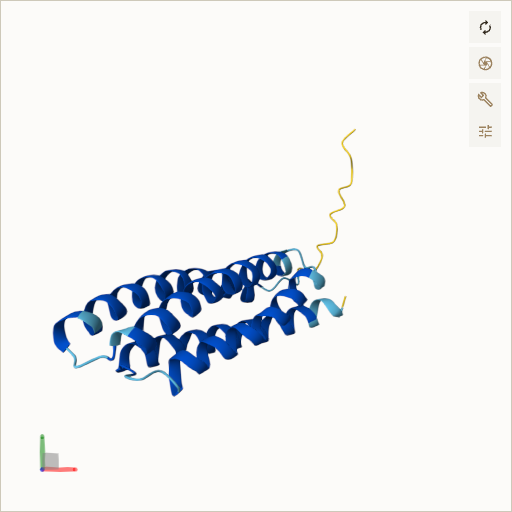
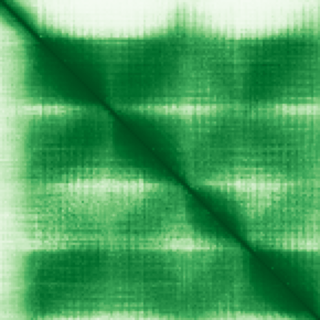
Predicted protein structure

Clinical relevance (Genomics England PanelApp)

Diagnostic Grade (Green)

  • DDG2P

    BIALLELIC, autosomal or pseudoautosomal
  • Fetal anomalies

    BIALLELIC, autosomal or pseudoautosomal
  • Intellectual disability

    BIALLELIC, autosomal or pseudoautosomal
  • Neurological ciliopathies

    BIALLELIC, autosomal or pseudoautosomal
  • Ophthalmological ciliopathies

    BIALLELIC, autosomal or pseudoautosomal
  • Rare multisystem ciliopathy disorders

    BIALLELIC, autosomal or pseudoautosomal
  • Renal ciliopathies

    BIALLELIC, autosomal or pseudoautosomal
  • Retinal disorders

    BIALLELIC, autosomal or pseudoautosomal

+14 more panels — install the extension to see the full list inline on any page.

Disease associations (Open Targets)

  • Joubert syndrome

    0.81
  • Joubert syndrome 2

    0.75
  • Meckel syndrome, type 2

    0.69
  • Joubert syndrome with oculorenal defect

    0.68
  • Meckel syndrome

    0.67
  • retinitis pigmentosa 98

    0.45
  • hereditary disease

    0.45
  • Joubert syndrome and related disorders

    0.43
  • Joubert syndrome with orofaciodigital defect

    0.38
  • retinitis pigmentosa

    0.38

Score is the Open Targets composite evidence score (0-1). Higher = stronger gene-disease association.

Protein function (UniProt)

Transmembrane protein 216

Essential for primary ciliogenesis and embryonic development, facilitating the activation of Hedgehog (Hh) signaling pathway. Disrupts the interaction of GLI2 and GLI3 with the negative regulator SUFU. Inhibiting SUFU's interaction with GLI2 promotes the entry of GLI2 into the nucleus, allowing it to activate Hh target gene expression. Disrupting SUFU's interaction with GLI3 prevents its conversion into the repressor form, leading to increased nuclear GLI3 and enhanced Hh signaling. Required for the proper development and structural integrity of photoreceptor outer segment disks, ensuring normal outer segment morphogenesis and survival of photoreceptors

Curated MONDO disease pages that list TMEM216 among their top associated genes.

Data sources: HGNC (CC BY 4.0), AlphaFold (CC BY 4.0, Jumper et al. Nature 2021), Genomics England PanelApp (CC BY 4.0), ClinGen, Open Targets (CC0), UniProt.

Not for sole clinical decision-making. Always verify against primary sources.